
PU leather is made by coating or compounding polyurethane resin on a substrate, and then undergoing a series of post-treatment processes, mainly simulating the appearance and touch of genuine leather.
1. Preparation of substrate: The substrate determines the basic form and strength of PU leather.
Common substrates include knitted fabric, non-woven fabric, canvas, etc. Some thin PU leather also uses paper substrates.
The substrate needs to undergo pre-treatment such as cleaning, drying, and stretching to remove impurities and adjust its flatness, ensuring a tight bond with the polyurethane resin in the future.
2. Coating/Composite: This step involves combining polyurethane resin with the substrate to form the main body of PU leather, which can be achieved through two main processes.
Dry process: The dissolved polyurethane resin is directly coated on the surface of the substrate, and then sent to a drying oven to evaporate the solvent, cure the resin into a film, and finally form a single-layer or multi-layer structure of PU leather. This process is simple and suitable for making PU leather for clothing and luggage.
Wet process: First, polyurethane resin is coated on release paper (simulating genuine leather patterns), then immersed in water to solidify the resin and form a microporous structure (similar to the fiber layer of genuine leather). Afterwards, the substrate is attached to the solidified resin layer, and finally the release paper is peeled off. This process produces PU leather with better breathability and a touch closer to genuine leather.
3. Post processing: Post processing determines the final texture and function of PU leather, and the steps are adjusted according to requirements.
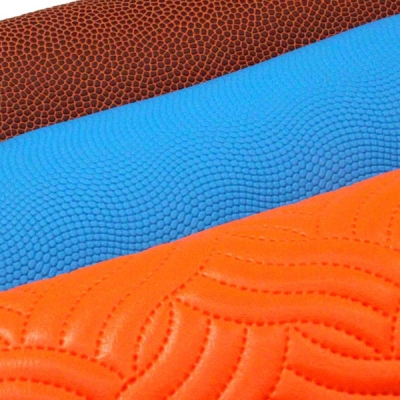
Surface treatment: Pressing leather textures (such as lychee and cowhide patterns) through an embossing machine, or dyeing and spraying to make the color more uniform and the surface more glossy.
Function treatment: add special coating according to the purpose, such as waterproof coating (for outdoor products), wear-resistant coating (for sofas and shoes), and some will also be treated with anti-aging and anti-bacterial treatment.
Cutting and inspection: Finally, the large area of PU leather is cut to the required size, and the surface is checked for defects and uniform thickness. After passing the inspection, it can be used for production.


Add comment
要发表评论,您必须先登录。