
Why does PU leather have needle holes? How to solve it?
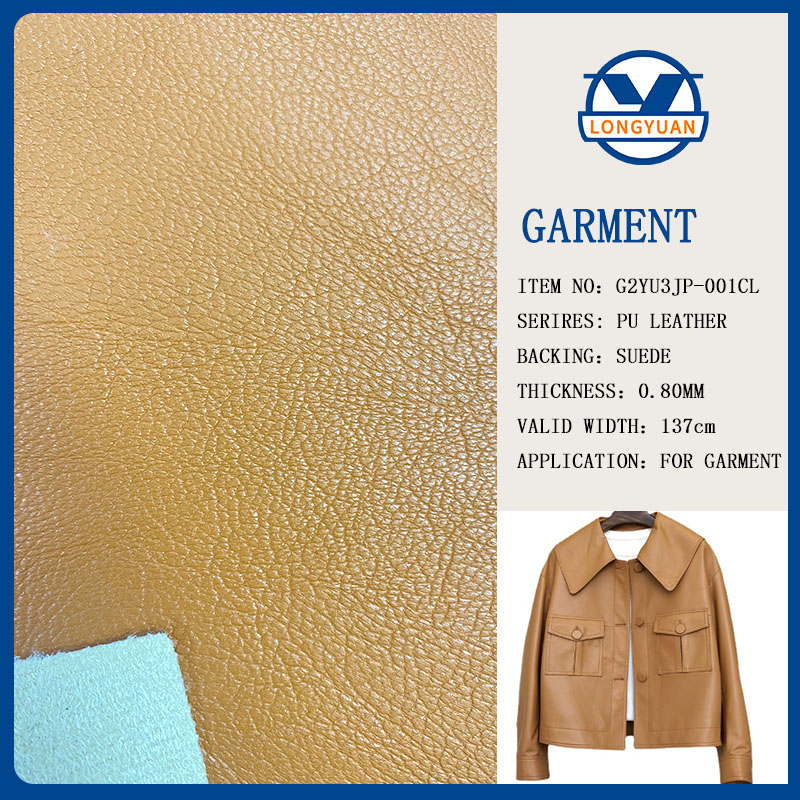
The presence of needle holes on PU leather is a defect, mainly due to the interaction between material properties and production processes.
From a material perspective, improper treatment of low-quality PU resin or base fabric can lead to uneven coating adhesion and the formation of micro pores.
In the process of coating, if the solvent evaporates too quickly (especially in high temperature environments), the coating will leave needle like defects if it cannot be leveled in time.
When the environmental humidity is too high, the mixing of moisture into the coating system can also cause similar problems.
Equipment factors cannot be ignored. Insufficient mold accuracy or unstable pressure can lead to uneven coating thickness, and weak areas are prone to forming needle holes.
In addition, if the defoaming is not sufficient or the stirring time is insufficient during the production process, residual bubbles will also appear as surface needle holes after solidification.
The generated needle holes can be repaired using a graded repair strategy:
Minor needle holes are directly filled with specialized leather repair agents, which automatically close tiny pores through their good leveling properties.
Moderate damage requires cleaning the surface first, then filling the depressions with repair paste, and polishing with fine sandpaper until smooth after complete drying.
Severe needle holes require the use of hot pressing edge sealing technology to re fuse the material under professional equipment. After repair, it is recommended to spray the same color paste and fix the color to ensure consistency in appearance. It is worth noting that different thicknesses of PU leather require the use of repair materials with corresponding hardness, and overly soft fillers may not provide sufficient support.