
What are the technical difficulties in PVC leather production?
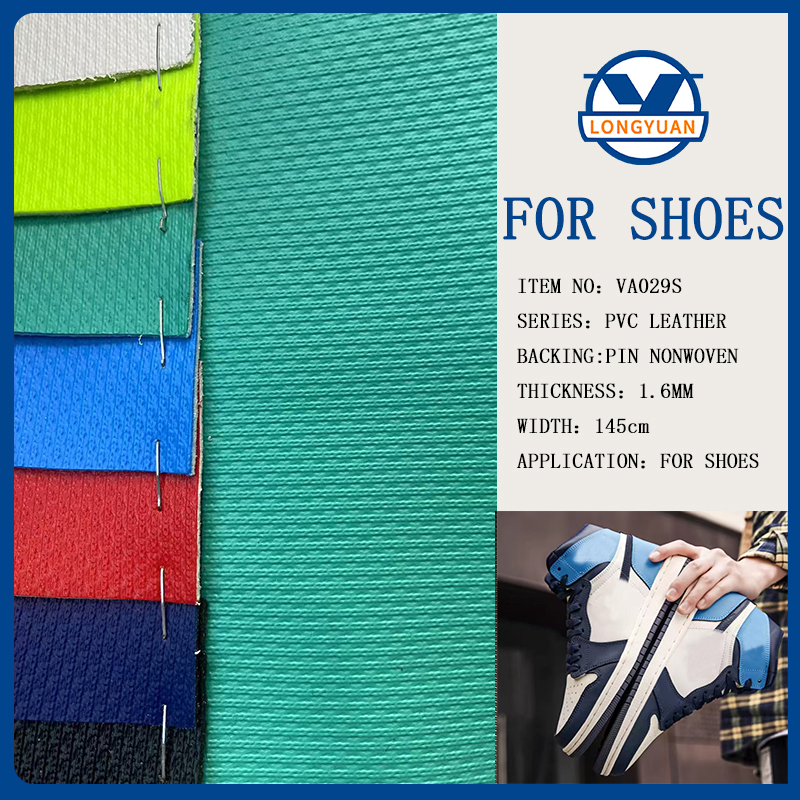
There are multiple technical difficulties in the production process of PVC leather, which need to be comprehensively solved from multiple dimensions such as raw material control, process accuracy, and environmental management.
The main difficulties and coping strategies are introduced as follows:
1. Raw material ratio and stability control
Precise control of plasticizers:
The amount of DOP and other plasticizers added should be strictly controlled within the range of 40-60 parts per 100 parts of PVC resin. Excessive amounts can cause the leather to become too soft, while insufficient amounts can lead to hardening and cracking.
Solution: Replace migration resistant plasticizers (such as polyester type) to reduce surface micropores caused by volatilization.
Processing of fillers and additives:
When the moisture content of fillers such as CaCO3 in hard PVC is greater than 0.3%, high temperature processing is prone to producing bubbles; Insufficient stabilizer addition (<2 parts) can cause resin decomposition and gas production.
Solution: Dry the filler to a moisture content of ≤ 0.3%, and add the stabilizer in a ratio of 2-3 parts.
2. Technological difficulties
Defects in fabric processing:
Incomplete desizing of the base fabric (cooking temperature<90 ℃ or time<30 minutes) results in residual oil stains, reducing the adhesion of the PVC layer.
Solution: Boil at 100 ℃ for 60 minutes+apply a base layer for reinforcement and bonding.
Coating uniformity challenge:
The distance error of the scraper is greater than 0.1mm, resulting in uneven thickness (such as the actual fluctuation of the target 0.5mm leather body ± 0.2mm).
Solution: Soft PVC uses low shear screws to reduce thermal damage; Hard PVC increases screw back pressure to 22MPa to enhance melt density.
Drying and plasticization control:
Improper temperature zoning of the oven (such as pre drying zone>80 ℃) can cause surface crust, and internal volatile matter cannot be discharged to form bubbles.
Solution: Soft PVC: Pre drying at 60-80 ℃ for 3-5 minutes → final drying at 150-180 ℃ for 5-8 minutes; Hard PVC: Synchronized upgrade of dual stage vacuum pump improves pumping efficiency by 40%.
3. Key measures for quality optimization
Online monitoring: Integrated infrared moisture meter+melt pressure sensor for real-time warning of process deviations.
Quick troubleshooting method: replace dry raw materials to verify the source of bubbles; Short term shutdown of the vacuum system to compare the number of bubbles.
Cross process collaboration: The interval between the base fabric priming and coating processes is ≤ 10 minutes to prevent interface oxidation.
By refining raw materials, standardizing process parameters, and upgrading environmental equipment, the bottleneck of PVC leather production can be systematically overcome.